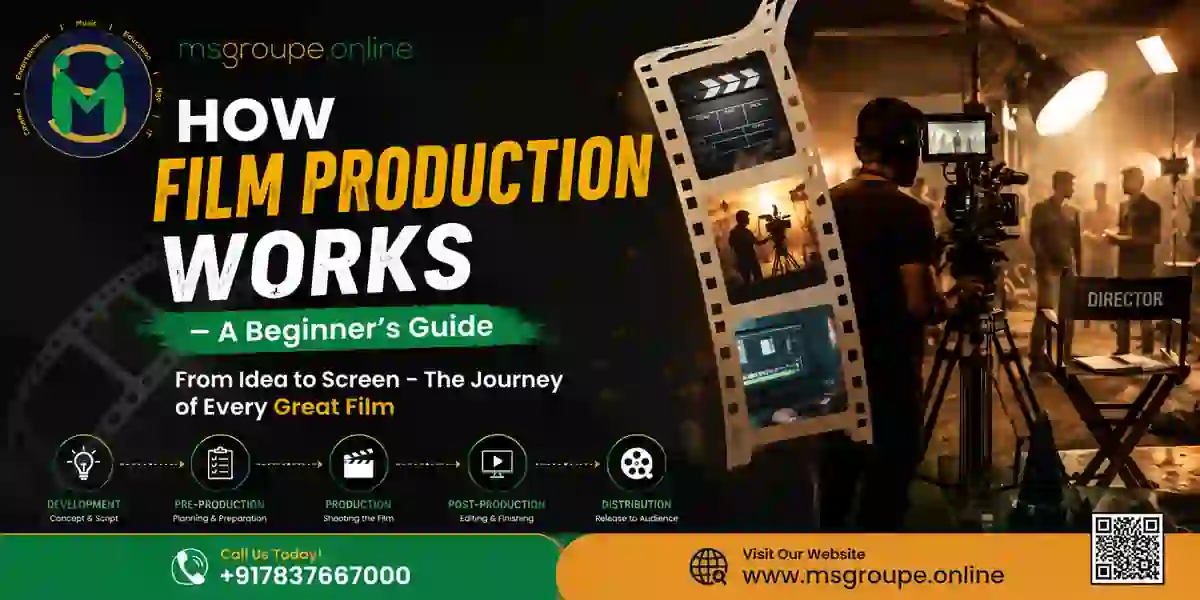
How Film Production Works: A Beginner's Guide (2026)
Have you ever watched the end credits of a movie roll for five straight minutes and wondered what all those hundreds of people actually did? If so, you are not alone. Film production looks like magic from the outside, but it is really a series of well-organized, repeatable steps that any beginner can learn.
In this guide, we will walk through exactly how film production works, from the first spark of an idea to the moment a movie reaches an audience. Whether you are an aspiring filmmaker, an actor exploring the industry, or simply a movie lover who wants to understand the craft, this article will give you a clear, practical roadmap.
By the end, you will understand the three core phases of film production, the key roles on a film set, the tools professionals use, and how you can start building a career in this exciting field.
Table of Contents
- What Is Film Production?
- The Three Phases of Film Production
- Pre-Production: Where Every Film Begins
- Production: Lights, Camera, Action
- Post-Production: Shaping the Final Story
- Key Roles in a Film Production House
- Tools and Technology Used in Modern Filmmaking
- Common Challenges Beginners Face
- How to Start Your Career in Film and Acting
- Understanding Different Types of Film Productions
- The Role of Collaboration in Film Production
- Budgeting Basics for New Filmmakers
- Frequently Asked Questions
- Final Thoughts
What Is Film Production?
Film production is the entire process of turning an idea into a finished film that audiences can watch, whether in theaters, on streaming platforms, or on television. It covers everything from writing the first draft of a script to the final export of a color-corrected, sound-mixed movie ready for release.
Most people assume film production only means the days actors spend in front of a camera. In reality, that is just one part of the journey. A single feature film can take anywhere from a few months to several years to complete, and the vast majority of that time happens before and after the cameras ever start rolling.
Understanding this full timeline is the first step to appreciating how films are made, and it is essential knowledge if you want to work in the industry someday.
The Three Phases of Film Production
Every film, no matter the budget or genre, moves through three major phases:
- Pre-production – planning, writing, casting, and preparation
- Production – actual filming, also called principal photography
- Post-production – editing, sound design, visual effects, and finishing
Some professionals add a fourth phase called distribution, which covers marketing and releasing the film to audiences. We will touch on that too, since it matters just as much as the creative work.
Let's break down each phase in detail.
Pre-Production: Where Every Film Begins
Pre-production is arguably the most important phase in film production. Studies within the industry consistently show that films with strong pre-production planning face fewer costly problems once shooting begins. This is the stage where a script becomes a workable plan.
Developing the Script
Every film starts with a story. Writers develop a screenplay through multiple drafts, often working closely with producers and directors to refine the plot, characters, and dialogue. A strong script is the foundation that everything else is built on.
Budgeting and Scheduling
Once a script is locked, producers create a detailed budget and shooting schedule. This includes costs for cast, crew, equipment, locations, permits, insurance, and post-production work. A realistic budget prevents a project from running out of money halfway through.
Casting
Casting directors audition actors for each role. This is where acting schools play a valuable role, since trained actors typically walk into auditions with stronger technique, better cold-reading skills, and more confidence in front of a camera or panel.
Location Scouting and Set Design
Location scouts search for the right settings, while production designers plan sets, props, and overall visual style. Every location needs permits, safety checks, and logistical planning.
Hiring the Crew
Producers and line producers assemble the full crew: cinematographers, sound recordists, gaffers, grips, costume designers, makeup artists, and dozens of other specialists. A well-organized production house typically has an established network of reliable crew members ready to staff a project quickly.
By the end of pre-production, everyone should know exactly what they are filming, where, when, and with what resources.
Production: Lights, Camera, Action
This is the phase most people picture when they think of filmmaking. Production, or principal photography, is when the script actually gets filmed.
A Typical Shooting Day
A film set runs on a tight schedule. Days often start early with crew call times, followed by lighting and camera setup, rehearsals, and then takes. Directors and cinematographers work together to capture each scene from multiple angles, giving editors options later.
Managing the Set
The assistant director manages the schedule and keeps everyone on track. Continuity supervisors track details like costume, props, and hairstyles so scenes match from shot to shot, even if they are filmed days apart.
Working with Actors
Directors guide actors through performances, often shooting several takes of the same scene to capture the best version. This is where an actor's training truly shows. Graduates of a serious acting school tend to adapt faster to a director's notes and maintain consistent energy across dozens of takes.
Sound and Camera Departments
While cameras capture the visuals, sound recordists capture clean dialogue and ambient audio. Both departments must sync perfectly, since post-production teams rely on organized, well-labeled footage and sound files.
Production can last anywhere from a few days for a short film to several months for a large feature. Once the last scene is shot, the production wraps, and the project moves into post-production.
Post-Production: Shaping the Final Story
Post-production is where a film truly comes together. This phase transforms raw footage into a polished story.
Editing
Editors assemble the footage into a coherent narrative, choosing the best takes, trimming pacing, and building the emotional rhythm of the film. This is often described as the second draft of the screenplay, written entirely with picture and sound.
Sound Design and Music
Sound designers add effects, clean up dialogue, and blend everything with a musical score. Good sound design is often invisible, yet it shapes emotion more than most viewers realize.
Visual Effects and Color Grading
VFX artists add anything that could not be captured practically, from small object removals to full digital environments. Colorists then grade the footage, giving the film its final visual tone and mood.
Final Review and Delivery
Once editing, sound, and visuals are locked, the film goes through quality control checks before being delivered in the formats required by theaters or streaming platforms.
Distribution
After the film is finished, a distribution strategy determines how it reaches audiences, through festivals, theatrical release, streaming, or a combination. A capable entertainment company typically supports this stage with marketing, publicity, and distribution partnerships that an independent filmmaker may not have access to alone.
Key Roles in a Film Production House
A professional production house brings together many specialists. Here are some of the most important roles beginners should know:
- Producer – oversees budget, schedule, and overall project management
- Director – guides the creative vision and performances
- Cinematographer (DOP) – designs the visual look and camera work
- Production Designer – shapes sets, props, and visual environment
- Editor – assembles the final cut of the film
- Sound Designer – builds the audio landscape
- Casting Director – finds and selects actors for each role
- Line Producer – manages day-to-day budget and logistics on set
Understanding these roles helps beginners figure out where their own interests and strengths might fit best within the industry.
Tools and Technology Used in Modern Filmmaking
Film production today relies on a mix of creative craft and modern technology. Some tools that beginners should become familiar with include:
- Cameras and lenses – digital cinema cameras have replaced most film stock in modern productions
- Lighting equipment – LED panels and traditional fixtures shape the mood of every scene
- Editing software – programs used to cut and assemble footage into a finished film
- Sound recording equipment – microphones and recorders that capture clean production audio
- Visual effects software – used to create digital environments, creatures, and enhancements
- Color grading tools – software used to finalize the visual tone of a project
A strong film maker does not need to master every tool personally, but understanding how each department works makes collaboration far more effective.
Common Challenges Beginners Face
Film production is rewarding, but it comes with real challenges. Being aware of them early can save beginners a lot of frustration.
- Budget constraints – most beginner projects have limited funds, so planning matters enormously
- Time management – schedules can slip quickly without strong organization
- Communication gaps – dozens of people must stay aligned on the same creative vision
- Technical learning curve – cameras, lighting, and editing software all require practice
- Building a reliable network – finding trustworthy crew, actors, and collaborators takes time
The good news is that none of these challenges are unique to you. Every successful filmmaker and actor working today faced the same learning curve when they started.
How to Start Your Career in Film and Acting
If this guide has sparked your interest in filmmaking or acting, here is a practical starting point.
For Aspiring Filmmakers
Start small. Shoot short films with whatever equipment you have access to. Study the pre-production, production, and post-production process on every project, even a five-minute short. Working alongside an established production house or film maker is one of the fastest ways to learn the real workflow, since you see professional standards up close instead of only reading about them.
For Aspiring Actors
Formal training changes everything. A structured acting school teaches voice, movement, improvisation, camera technique, and audition skills that are difficult to develop alone. Combine training with as much on-camera practice as possible, since comfort in front of a lens only builds through repetition.
For Both Paths
Building relationships within a supportive entertainment company can open doors to real projects, mentorship, and industry connections that are hard to access on your own. The film industry rewards persistence, professionalism, and a genuine willingness to keep learning.
Understanding Different Types of Film Productions
Not every film production looks the same. Understanding the different formats helps beginners choose the right path for their goals and budget.
Short Films
Short films are one of the best ways for beginners to learn the full production process without a huge financial commitment. They typically run under 40 minutes and are often used to showcase talent to festivals, investors, or a production house looking for new voices.
Feature Films
Feature films run 90 minutes or longer and require significantly more planning, budget, and crew. They follow the same three-phase structure, but each phase takes considerably more time and coordination.
Web Series and Digital Content
With the rise of streaming platforms, web series have become a popular entry point for new filmmakers and actors. Production timelines are often shorter, and budgets can be more flexible, making this format attractive for an emerging entertainment company or independent creator.
Commercials and Branded Content
Commercial production follows a compressed version of the same workflow, often completed in days rather than months. Many filmmakers build their early careers and technical skills through commercial work before moving into narrative filmmaking.
The Role of Collaboration in Film Production
No film is made by one person alone. Even a simple short film usually involves a writer, a director, a camera operator, and at least one actor. As productions scale up, the web of collaboration grows dramatically.
A director might have a clear creative vision, but it only becomes reality through the technical skill of the cinematographer, the timing of the editor, and the emotional truth an actor brings to the role. This is why finding the right collaborators matters so much. A trusted film maker with an established network can assemble a team faster and with more confidence than someone starting from scratch.
This is also why many beginners choose to align themselves with an established production house or entertainment company early in their careers. Instead of trying to build every relationship from zero, you gain access to a network of proven professionals, from cinematographers to sound designers, who already understand how to work together efficiently.
Budgeting Basics for New Filmmakers
Understanding money matters just as much as understanding creative craft. Here are a few budgeting basics every beginner should know before starting a film production:
- Above-the-line costs cover the script, director, producers, and principal cast
- Below-the-line costs cover crew, equipment, locations, and post-production
- Contingency funds should typically be set aside to cover unexpected expenses, since almost every production runs into at least one surprise cost
- Post-production budgets are often underestimated by beginners, even though editing, sound, and color work can take as long as filming itself
Even a small independent project benefits from a simple spreadsheet tracking every expected cost. This single habit prevents more production delays than almost any other planning step.
Frequently Asked Questions
How long does film production usually take?
A short film may take a few weeks from start to finish, while a full feature film often takes six months to two years when you include pre-production and post-production.
What is the most important phase of film production?
Pre-production is often considered the most critical phase, since strong planning here prevents costly problems during filming and editing.
Do I need film school to work in film production?
No, though formal training at a film school or acting school can accelerate your learning. Many successful filmmakers and actors built their careers through hands-on experience and mentorship.
What is the difference between a production house and a production company?
The terms are often used interchangeably. In general, both refer to a business that manages the creative and logistical process of producing films, commercials, or shows.
How much does it cost to produce a film?
Costs vary enormously, from a few thousand dollars for a short independent project to tens of millions for a major studio feature. Budget depends on cast, crew size, locations, equipment, and post-production needs.
What skills do I need to break into the film industry?
Strong communication, adaptability, technical curiosity, and a willingness to start in entry-level roles are some of the most valuable skills for beginners entering film production or acting.
Final Thoughts
Film production is a structured, learnable craft built on three major phases: pre-production, production, and post-production. Every blockbuster and every independent short film follows this same basic path, just at different scales.
If you are ready to turn your passion for film or acting into a real career, the right guidance and the right team make all the difference.
Ready to Start Your Film Journey?
📞 Call or WhatsApp us today: +91 7837667000
🌐 Visit us at www.msgroupe.online
Your story deserves to be told. Let's make it together.
🔥 Supported by Nav Times News | 🎬 Powered by MS Asian Film Academy | 🚀 Blog by MSAsian Entertainment