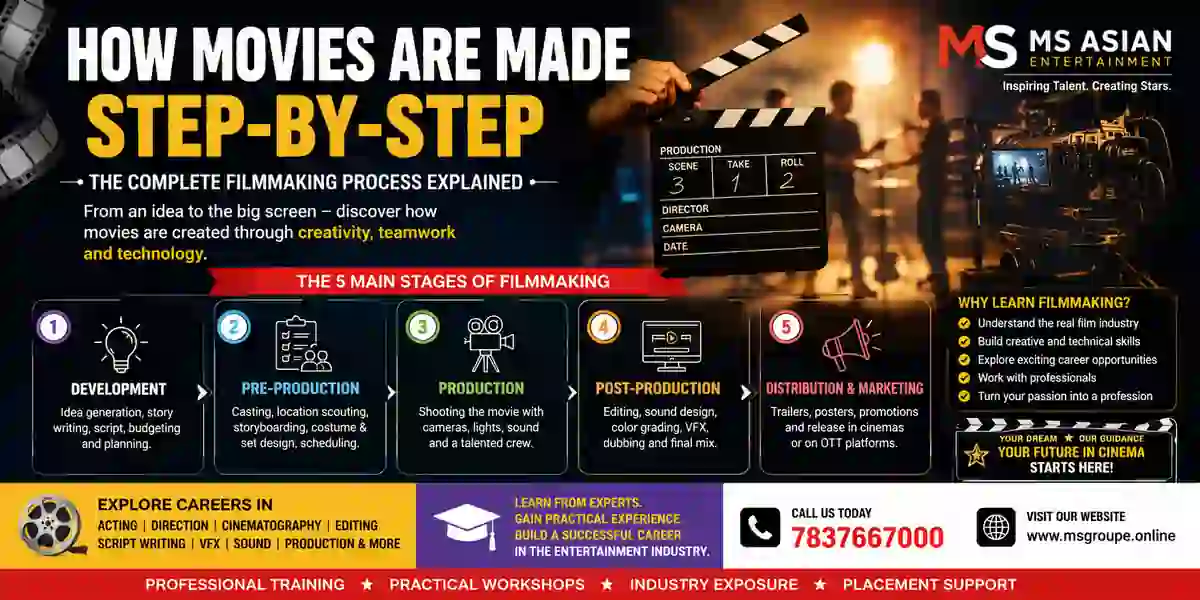
How Movies Are Made (Step-by-Step): The Complete Filmmaking Process Explained
What Is Filmmaking?
Filmmaking is the process of creating a movie from an idea to the final release. It combines storytelling, visual creativity, acting, technology, music, editing, and production management.
The filmmaking journey is generally divided into five major stages:
- Development
- Pre-Production
- Production
- Post-Production
- Distribution & Marketing
Each stage plays a vital role in turning a simple concept into a complete cinematic experience.
Step 1: Development – The Beginning of a Movie
Every movie starts with an idea.
The development stage is where filmmakers create the foundation of the story. This is one of the most important phases because the success of a movie often depends on the strength of its script and concept.
Idea Generation
Movie ideas can come from:
- Real-life incidents
- Books and novels
- Historical events
- Original concepts
- Social issues
- Personal experiences
- Fantasy imagination
A strong idea is developed into a storyline and eventually converted into a screenplay.
Script Writing
The screenplay is the blueprint of the film. It includes:
- Dialogues
- Character descriptions
- Scene directions
- Camera references
- Emotional moments
- Action sequences
Professional screenwriters spend months refining scripts to make the story engaging and cinematic.
Budget Planning
Once the script is ready, producers estimate the overall budget, including:
- Actor fees
- Equipment costs
- Locations
- Costumes
- Visual effects
- Editing
- Promotions
Large films may have budgets worth crores, while independent films operate on smaller budgets.
Finding Investors
Film producers pitch the project to investors, studios, or production companies to secure funding.
At MS Asian Entertainment, aspiring artists and filmmakers can understand how the entertainment industry works behind the scenes, including movie planning and production basics.
Step 2: Pre-Production – Planning the Film
Pre-production is the preparation phase before actual shooting begins.
This stage ensures everything is organized properly to avoid problems during filming.
Casting Actors
Casting directors select actors suitable for different roles.
Actors may go through:
- Auditions
- Screen tests
- Dialogue readings
- Camera tests
Choosing the right actors is crucial because performances directly impact audience engagement.
Hiring the Crew
A movie requires many professionals, including:
- Director
- Cinematographer
- Editor
- Costume designer
- Makeup artists
- Sound engineers
- Production managers
- Light technicians
Filmmaking is always a team effort.
Location Scouting
The production team searches for suitable locations based on the script.
Locations can include:
- Studios
- Outdoor locations
- Villages
- Cities
- Forests
- Foreign destinations
Permission and legal approvals are also arranged during this stage.
Storyboarding
Storyboards are visual sketches of scenes.
They help directors plan:
- Camera angles
- Actor movements
- Lighting setups
- Scene composition
Costume & Set Design
Designers create costumes according to characters and the movie’s theme.
Set designers prepare locations and backgrounds to match the visual mood of the film.
Step 3: Production – Shooting the Movie
Production is the stage where actual filming takes place.
This is often the most exciting and expensive phase of filmmaking.
Camera Setup
Cinematographers decide:
- Camera positions
- Lenses
- Lighting
- Framing
- Movement shots
Modern movies use advanced digital cinema cameras for high-quality visuals.
Shooting Scenes
Movies are rarely shot in sequence.
Scenes are filmed based on:
- Actor availability
- Location schedules
- Budget efficiency
- Lighting conditions
Directors guide actors to perform scenes according to the emotional requirements of the script.
Multiple Takes
Many scenes are shot multiple times to achieve perfection.
Different versions help editors choose the best performance later.
Sound Recording
Dialogue and environmental sounds are recorded carefully during filming.
Poor audio quality can negatively affect the audience experience.
Managing the Set
Production managers coordinate:
- Timelines
- Crew movement
- Equipment handling
- Safety protocols
- Food and logistics
A smooth production process helps save both time and money.
Students interested in acting, camera work, direction, or entertainment careers can learn more through professional industry guidance at MS Asian Entertainment.
Step 4: Post-Production – Bringing the Movie Together
Post-production begins after shooting is completed.
This is where raw footage transforms into a polished film.
Video Editing
Editors arrange scenes according to the screenplay.
They remove unnecessary footage and improve pacing, storytelling, and emotional impact.
Editing is one of the most important parts of filmmaking because it shapes the final audience experience.
Sound Design
Sound designers enhance the film with:
- Background music
- Sound effects
- Ambient sounds
- Voice corrections
Good sound design creates emotional depth and realism.
Dubbing & ADR
Sometimes dialogues are re-recorded in studios to improve clarity.
This process is called ADR, which stands for Automated Dialogue Replacement.
Color Grading
Color grading improves the visual appearance of scenes.
Different tones create different moods:
- Warm tones for emotional scenes
- Dark tones for thrillers
- Vibrant tones for fantasy films
Visual Effects
Many modern films use CGI and VFX for:
- Action scenes
- Fantasy worlds
- Explosions
- Creatures
- Space environments
VFX artists combine creativity and technology to create cinematic visuals.
Final Mastering
Once editing, sound, and VFX are complete, the final movie version is prepared for theaters, streaming platforms, and television.
Step 5: Distribution and Marketing
After the movie is completed, it must reach the audience.
This stage focuses on promotions and release strategies.
Movie Trailers
Trailers create excitement and attract viewers before release.
A well-edited trailer can significantly increase audience interest.
Posters and Promotions
Marketing teams promote movies through:
- Social media
- Interviews
- Press conferences
- TV advertisements
- Influencer campaigns
- YouTube promotions
Theatrical Release
Movies are released in cinemas across different cities and countries.
Release timing is strategically planned to maximize profits.
OTT & Streaming Platforms
Today, many films release directly on streaming platforms like:
- Netflix
- Amazon Prime Video
- Disney+ Hotstar
- JioCinema
Digital streaming has changed the entertainment industry significantly.
Important Roles in Movie Production
Director
The director controls the creative vision of the movie. They guide actors, camera teams, editors, and the overall storytelling process.
Producer
The producer manages budget, scheduling, financing, and production operations.
Cinematographer
The cinematographer is responsible for camera visuals, lighting, and shot composition.
Editor
The editor combines scenes to create the final storytelling structure.
Actors
Actors bring characters to life through performance and emotional expression.
Music Director
The music director creates songs and background scores that enhance emotional impact.
Why Understanding Filmmaking Is Important
Learning how movies are made helps aspiring artists understand the real entertainment industry.
Benefits include:
- Better acting knowledge
- Understanding camera presence
- Improved storytelling skills
- Industry awareness
- Career preparation
At MS Asian Entertainment, students and entertainment enthusiasts can explore industry-focused learning experiences related to acting, media, and filmmaking.
The Evolution of Modern Filmmaking
Technology has transformed filmmaking dramatically.
Today’s filmmakers use:
- Digital cinema cameras
- AI-powered editing tools
- Drone cinematography
- Virtual production
- Motion capture
- Advanced CGI
Social media platforms have also created opportunities for independent creators and digital entertainers.
Modern filmmaking is no longer limited to big studios. Creative individuals can now produce high-quality content using affordable technology and digital platforms.
Career Opportunities in the Film Industry
The entertainment industry offers many career options, including:
- Acting
- Film direction
- Script writing
- Video editing
- Cinematography
- Sound engineering
- Production management
- Makeup artistry
- Costume design
- VFX and animation
The demand for skilled entertainment professionals continues to grow globally.
Conclusion
Movies are created through a detailed and collaborative process that combines creativity, technology, storytelling, and teamwork. From scriptwriting to editing and final release, every stage plays an important role in shaping the audience experience.
Understanding the step-by-step filmmaking process helps aspiring artists appreciate the hard work behind cinema while preparing themselves for opportunities in the entertainment world.
If you are passionate about acting, filmmaking, or entertainment careers, explore professional guidance and creative opportunities through MS Asian Entertainment by visiting:
The entertainment industry continues to evolve rapidly, and learning the fundamentals of filmmaking can open doors to exciting creative careers in cinema, digital media, and content creation.
Frequently Asked Questions
Q1. What are the main stages of filmmaking?
The main stages of filmmaking are development, pre-production, production, post-production, and distribution.
Q2. How long does it take to make a movie?
Movie production time depends on the project size. Some films take a few months, while large productions may require several years.
Q3. What is the role of a film director?
A film director manages the creative vision of the movie, including acting performances, camera shots, storytelling, and scene execution.
Q4. Why is editing important in filmmaking?
Editing improves storytelling, pacing, emotional impact, and overall movie quality by combining scenes into a final cinematic structure.
Q5. What skills are required for acting careers?
Actors need confidence, communication skills, emotional expression, camera understanding, and performance practice.
Q6. Can beginners enter the film industry?
Yes, beginners can start with acting classes, workshops, auditions, short films, and entertainment training programs.
Q7. What is post-production in movies?
Post-production includes editing, sound design, color grading, visual effects, dubbing, and final mastering after shooting is completed.
Q8. How are movies promoted before release?
Movies are promoted through trailers, posters, interviews, social media campaigns, advertisements, and digital marketing.
Q9. What careers are available in filmmaking?
Filmmaking offers careers in acting, direction, cinematography, editing, production management, VFX, scriptwriting, and sound engineering.
Q10. Where can I learn more about entertainment and filmmaking?
You can explore entertainment-focused learning opportunities through MS Asian Entertainment at https://www.msgroupe.online.
🔥 Supported by Nav Times News | 🎬 Powered by MS Asian Film Academy | 🚀 Blog by MSAsian Entertainment