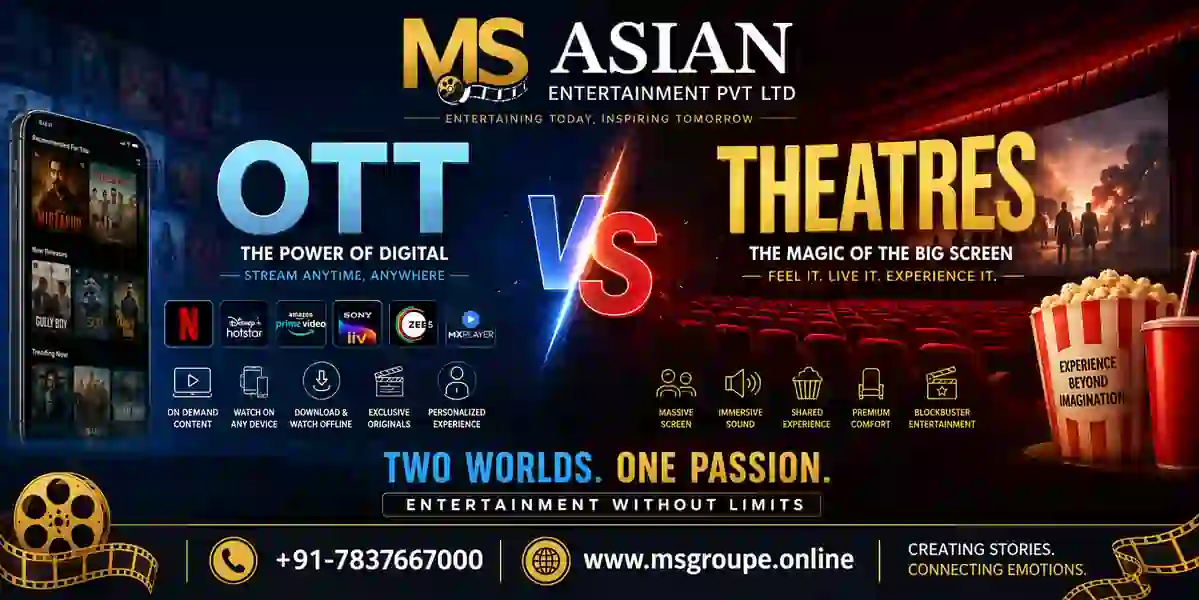
The Future of Entertainment: OTT vs. Theatres in India
The Rise of OTT Platforms in India
OTT platforms witnessed explosive growth in India during and after the COVID-19 pandemic. When theatres shut down temporarily, audiences turned to streaming platforms for entertainment. What initially seemed like a temporary shift became a long-term habit.
India’s OTT market is projected to grow significantly in the coming years due to rising smartphone penetration, affordable internet, and demand for regional content. Industry reports indicate that OTT remains one of the fastest-growing entertainment segments in India.
Several factors contributed to this OTT revolution:
1. Affordable Internet Access
India has some of the world’s cheapest mobile data plans. With affordable 4G and expanding 5G connectivity, millions of users can stream high-quality content anytime and anywhere.
2. Smartphone Penetration
Even in smaller cities and rural areas, smartphone usage has increased rapidly. This has allowed OTT platforms to reach audiences beyond metropolitan regions.
3. Convenience and Flexibility
Viewers no longer need to travel to theatres or follow television schedules. OTT platforms offer complete flexibility to watch content at any time.
4. Diverse Content
OTT platforms introduced content that traditional cinema often avoided. Audiences now enjoy:
- Crime thrillers
- Dark dramas
- Regional stories
- International content
- Experimental filmmaking
- Documentary-style storytelling
This diversity has changed audience expectations permanently.
5. Regional Content Boom
Regional storytelling has become one of the strongest pillars of OTT growth in India. Viewers increasingly prefer stories in their native languages, leading to a surge in Tamil, Telugu, Malayalam, Bengali, Punjabi, Marathi, and Haryanvi content.
Why OTT Platforms Are Winning Audience Attention
OTT platforms have several advantages that make them extremely attractive to modern audiences.
Personalized Viewing Experience
Streaming platforms use algorithms to recommend content based on viewer preferences. This personalization creates a highly engaging experience.
Cost Effectiveness
A monthly OTT subscription often costs less than a single multiplex visit for a family. Rising ticket prices, food costs, and parking charges have made theatres expensive for many middle-class consumers.
Binge-Watching Culture
Web series have introduced binge-watching behavior in India. Audiences now enjoy consuming multiple episodes continuously, which creates deeper engagement with stories and characters.
Global Content Access
Indian viewers now consume Korean dramas, Spanish thrillers, Hollywood films, anime, and international documentaries alongside local content.
Experimental Storytelling
OTT platforms provide creative freedom to filmmakers. Stories that may not survive box office pressure can still succeed digitally.
The Emotional Power of Theatres
Despite OTT growth, theatres continue to offer something that streaming platforms cannot fully replicate: the collective cinematic experience.
Watching a film on a giant screen with surround sound and a live audience creates emotional intensity. In India, cinema is not just content—it is a celebration.
Big theatrical releases still generate massive excitement. Films featuring superstars often become cultural events with fan celebrations, social media trends, and nationwide discussions.
Recent blockbuster theatrical performances continue to prove that theatres remain highly relevant in India.
Why Theatres Still Matter
1. Community Experience
People enjoy laughing, crying, cheering, and reacting together during films.
2. Visual Spectacle
Action films, sci-fi movies, historical dramas, and large-scale cinematic experiences are better suited for theatres.
3. Star Culture
India’s superstar-driven film culture remains deeply connected with theatrical releases.
4. Family Outing Tradition
Going to the movies remains a social activity for families, couples, and friends.
5. Event-Based Entertainment
Theatres create hype and anticipation around major releases that OTT platforms often struggle to replicate.
OTT vs. Theatres: A Business Perspective
The entertainment industry is no longer operating under a single distribution model. Today, content creators must think strategically about release platforms.
Theatrical Revenue Model
Traditional theatrical revenue comes from:
- Ticket sales
- Food and beverages
- Advertising
- Distribution rights
- Overseas box office
Large-scale commercial films still benefit heavily from theatrical releases.
OTT Revenue Model
OTT platforms generate revenue through:
- Subscriptions (SVOD)
- Advertisements (AVOD)
- Premium content rentals (TVOD)
- Licensing deals
- Brand integrations
OTT platforms also purchase digital rights for films at massive prices. Some major Indian films now earn substantial revenue through streaming rights even before release.
Hybrid Release Models Are the Future
One of the biggest changes in entertainment is the rise of hybrid release strategies.
Today, many films follow this pattern:
- Theatrical release
- Short theatrical window
- OTT release within weeks
This strategy allows producers to maximize revenue from both channels.
Several films now move quickly from theatres to OTT platforms after completing their theatrical run.
The future may not belong exclusively to theatres or OTT platforms. Instead, it will belong to companies that understand how to balance both effectively.
Changing Audience Psychology
Modern audiences are becoming more selective about theatre visits.
People are now asking:
- “Is this film worth watching on the big screen?”
- “Can I wait for OTT?”
- “Will this experience feel different in theatres?”
This behavioral shift means only certain types of films dominate theatres:
- Action spectacles
- Franchise films
- Star-driven entertainers
- Visual epics
- Horror films with group appeal
Meanwhile, smaller dramas, experimental stories, and niche genres often perform better digitally.
The Role of Technology in Entertainment’s Future
Technology will continue shaping the future of entertainment in India.
Artificial Intelligence
AI is already influencing:
- Content recommendations
- Script analysis
- Audience behavior prediction
- Marketing automation
- Visual effects
Virtual Production
Advanced LED volume technology and virtual sets are changing filmmaking efficiency.
5G and Faster Streaming
High-speed internet will improve streaming quality, especially in Tier-2 and Tier-3 cities.
Immersive Theatre Experiences
Theatres are evolving with:
- 4DX
- IMAX
- Recliner seating
- Dolby Atmos
- Premium luxury experiences
Theatre owners understand they must offer more than just a screen.
The Importance of Regional Content
One of the most exciting developments in Indian entertainment is the rise of regional storytelling.
Audiences increasingly want authentic stories rooted in local culture, language, and emotion. OTT platforms have accelerated this shift by giving regional creators national and global visibility.
Regional cinema from South India has already demonstrated enormous theatrical power, while OTT platforms continue boosting regional web content consumption.
This trend opens huge opportunities for entertainment companies willing to invest in strong storytelling rather than only star power.
Opportunities for Production Houses
The evolving entertainment ecosystem creates major opportunities for production companies.
Companies that adapt quickly can benefit from:
- Digital-first storytelling
- Regional content creation
- Cross-platform distribution
- OTT partnerships
- Global audience reach
- Branded entertainment
- International collaborations
Entertainment brands must now think beyond traditional filmmaking.
How MS Asian Entertainment Pvt Ltd Fits Into the Future
MS Asian Entertainment Pvt Ltd represents the new generation of entertainment-focused companies that can thrive in this evolving ecosystem.
As audience behavior changes, companies must focus on:
- Strong storytelling
- Youth-centric content
- Regional audience engagement
- Digital marketing
- Multi-platform distribution
- OTT collaborations
- Social media-driven visibility
Modern entertainment is no longer limited to cinema halls or television screens. Today’s audience consumes content across:
- Smartphones
- Smart TVs
- Tablets
- Laptops
- Social platforms
Production houses that understand digital consumption patterns will have a major advantage in the coming years.
MS Asian Entertainment Pvt Ltd has the opportunity to position itself strongly in:
- OTT-ready productions
- Web series development
- Regional storytelling
- Digital entertainment branding
- Talent development
- Music and short-format content
- Youth-focused entertainment ecosystems
Challenges Facing OTT Platforms
Despite rapid growth, OTT platforms also face significant challenges.
1. Subscription Fatigue
Consumers may not want multiple paid subscriptions simultaneously.
2. Rising Content Costs
Producing premium content requires massive investment.
3. Competition
The OTT space is becoming crowded with local and global players.
4. Content Regulation
Governments and regulatory bodies are increasingly monitoring digital content.
5. Piracy
Digital piracy continues affecting entertainment revenues.
Challenges Facing Theatres
Theatre businesses also face pressure.
1. Rising Ticket Prices
High pricing can discourage family audiences.
2. Short Attention Spans
Digital entertainment competes heavily for audience attention.
3. OTT Convenience
Viewers may prefer home viewing for smaller films.
4. Content Dependency
Theatres heavily depend on blockbuster releases.
Can OTT Replace Theatres Completely?
The simple answer is no.
OTT platforms and theatres serve different emotional and entertainment needs.
OTT excels at:
- Convenience
- Personal viewing
- Experimental storytelling
- Long-format content
- Affordable entertainment
Theatres excel at:
- Spectacle
- Community experience
- Emotional intensity
- Event cinema
- Star-driven entertainment
Both ecosystems will continue evolving together rather than replacing each other entirely.
The Future of Indian Entertainment
The future of entertainment in India will likely include:
- Hybrid release strategies
- More regional storytelling
- Faster OTT premieres
- Event-driven theatrical releases
- AI-powered personalization
- Global Indian content
- Cross-platform entertainment ecosystems
- Creator-driven storytelling
India is becoming one of the world’s most dynamic entertainment markets. The country’s massive youth population, digital adoption, and storytelling culture create enormous opportunities for creators and businesses alike.
The entertainment companies that survive and grow will be those that understand one important truth:
Audiences no longer consume content in only one way.
The future belongs to flexibility, innovation, storytelling quality, and platform adaptability.
Conclusion
The debate between OTT and theatres is not about one defeating the other. It is about transformation.
OTT platforms have democratized entertainment, expanded creative freedom, and changed audience habits forever. Theatres, however, continue to deliver unmatched emotional and cinematic experiences.
India’s entertainment future will be shaped by coexistence rather than competition.
Viewers will continue watching large-scale spectacles in theatres while consuming web series, niche films, and personalized content on OTT platforms.
For entertainment companies like MS Asian Entertainment Pvt Ltd, this shift presents incredible opportunities. By embracing digital evolution while respecting cinematic storytelling traditions, modern entertainment brands can build strong connections with future audiences.
The future of Indian entertainment is not limited to screens—it is driven by stories, emotions, technology, and the ever-changing ways audiences choose to experience them.
FAQs
1. What is OTT in entertainment?
OTT (Over-The-Top) refers to digital streaming platforms that deliver content directly through the internet without traditional cable or satellite television.
2. Why are OTT platforms growing rapidly in India?
OTT platforms are growing due to affordable internet, smartphone penetration, regional content demand, flexible viewing options, and changing audience habits.
3. Will theatres shut down because of OTT platforms?
No. Theatres continue to remain important for blockbuster films, cinematic experiences, and social entertainment outings.
4. Which is better: OTT or theatres?
Both serve different purposes. OTT offers convenience and personalized viewing, while theatres provide immersive large-screen experiences.
5. Why do some films release quickly on OTT after theatres?
Studios use hybrid release strategies to maximize revenue from both theatrical and digital audiences.
6. How is regional content influencing Indian entertainment?
Regional storytelling is becoming highly popular because audiences prefer culturally relatable and language-specific content.
7. What are the biggest OTT platforms in India?
Popular OTT platforms in India include Netflix, Amazon Prime Video, JioHotstar, Sony LIV, Zee5, and MX Player.
8. How can production companies benefit from OTT growth?
Production houses can create web series, regional content, documentaries, digital films, and cross-platform entertainment projects.
9. Is OTT more profitable than theatres?
Profitability depends on the type of content, audience reach, production budget, and distribution strategy.
10. What is the future of entertainment in India?
The future lies in hybrid entertainment models where OTT and theatres coexist while technology, regional storytelling, and digital engagement continue evolving.
🔥 Supported by Nav Times News | 🎬 Powered by MS Asian Film Academy | 🚀 Blog by MSAsian Entertainment