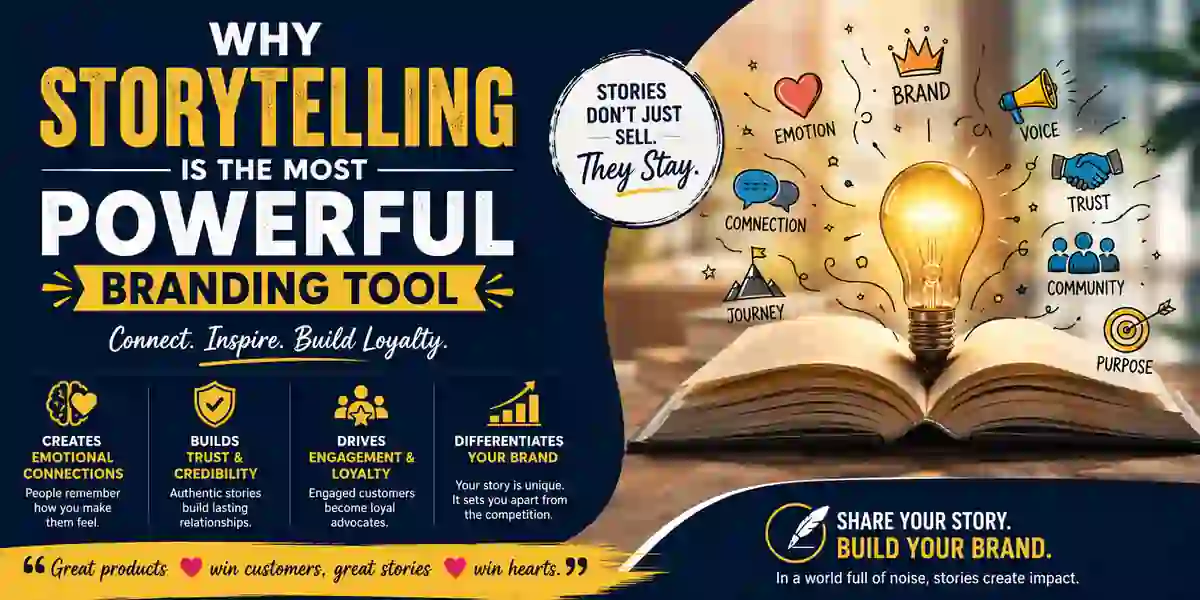
Why Storytelling is the Most Powerful Branding Tool in 2026
What is Brand Storytelling?
Brand storytelling is the art of using narratives, emotions, experiences, and authentic communication to express a brand’s identity and values.
Instead of only saying:
“Our product is high quality.”
A storytelling-driven brand explains:
- Why the product was created
- What problem inspired the idea
- How it impacts people’s lives
- What values the brand stands for
- What journey shaped the business
Storytelling gives meaning to a brand.
It creates a human connection that traditional marketing often fails to achieve.
Why Humans Naturally Connect With Stories
Humans have connected through stories for thousands of years. Long before digital marketing existed, stories were used to share knowledge, emotions, culture, and experiences.
Even today, our brains are naturally wired to respond to storytelling because stories:
- Trigger emotions
- Build empathy
- Improve memory retention
- Create trust
- Inspire action
Facts inform people.
Stories move people.
When a customer emotionally connects with a story, they are far more likely to trust the brand, remember it, and eventually purchase from it.
That emotional connection is what makes storytelling one of the strongest branding strategies in modern marketing.
Why Storytelling Matters More Than Ever in 2026
The digital marketing landscape has changed dramatically.
Consumers are smarter, more skeptical, and less patient than ever before. Traditional advertisements no longer work the way they once did.
People want authenticity.
In 2026, successful branding is no longer about who shouts the loudest. It is about who connects the deepest.
Storytelling matters because:
1. Attention Spans Are Shorter
People scroll rapidly through content on social media platforms. Brands only have a few seconds to capture attention.
A compelling story instantly creates curiosity and emotional engagement.
2. Customers Want Authentic Brands
Modern audiences can easily detect fake marketing.
Brands that share real experiences, founder journeys, customer transformations, and meaningful missions feel more trustworthy.
Authenticity builds credibility.
3. Emotional Branding Drives Sales
Research consistently shows that emotions influence buying decisions more than logic.
People may justify purchases logically later, but emotional connection often drives the initial decision.
Storytelling creates those emotions.
4. Competition Is Extremely High
Most industries today are saturated with competitors offering similar products and services.
Features can be copied.
Pricing can be matched.
But a unique story cannot be replicated.
Your story becomes your competitive advantage.
How Storytelling Builds a Powerful Brand Identity
A strong brand identity is more than visuals or design.
It is how people feel when they interact with your business.
Storytelling helps shape that identity in several important ways.
1. Storytelling Makes Your Brand Memorable
People forget advertisements quickly.
But they remember stories.
A memorable story helps customers recall your brand long after they have seen your content.
For example:
- A skincare brand talking about confidence struggles
- A startup sharing its founder’s late-night hustle journey
- A health brand explaining why it focuses on family wellness
These stories create emotional memory.
That memory increases brand recall and recognition.
2. Stories Humanize Your Business
People prefer buying from brands that feel human rather than corporate.
Storytelling gives brands personality.
It shows:
- Real people
- Real challenges
- Real values
- Real purpose
This human connection creates trust.
Customers begin to feel emotionally attached to the brand rather than simply viewing it as a seller.
3. Storytelling Creates Emotional Connections
Emotion is one of the biggest drivers of customer loyalty.
Stories can inspire:
- Happiness
- Motivation
- Hope
- Nostalgia
- Excitement
- Confidence
- Belonging
When a brand consistently creates emotional experiences, customers develop stronger loyalty and engagement.
4. Stories Build Trust and Credibility
Trust is one of the most valuable assets for any business.
People are more likely to trust brands that openly share:
- Their journey
- Their mission
- Their values
- Customer experiences
- Behind-the-scenes moments
Storytelling removes the feeling of “marketing pressure” and replaces it with genuine communication.
The Science Behind Storytelling in Branding
There is actual psychology behind why storytelling works so effectively.
When people hear stories, the brain releases chemicals associated with emotions and empathy.
Stories activate multiple areas of the brain, making the experience more immersive than plain facts or advertisements.
This is why storytelling improves:
- Brand recall
- Engagement rates
- Customer loyalty
- Conversion rates
- Social sharing
In simple words:
Stories make people feel something.
And people remember feelings more than information.
Types of Brand Stories That Work Best
Not every story needs to be dramatic.
Even simple, authentic stories can create powerful branding results.
Here are some of the most effective storytelling styles brands use today.
1. Founder Story
People love hearing how a business started.
Founder stories create inspiration and authenticity.
Examples include:
- Starting from a small room
- Solving a personal problem
- Overcoming struggles
- Pursuing a dream despite challenges
Founder stories build emotional trust.
2. Customer Success Stories
Customer transformation stories are extremely powerful because they provide social proof.
Instead of simply promoting your product, you show how it positively impacted someone’s life.
These stories feel more believable and relatable.
3. Behind-the-Scenes Stories
Audiences enjoy seeing the process behind a business.
This can include:
- Product creation
- Packaging
- Team culture
- Daily operations
- Creative brainstorming
- Manufacturing process
Behind-the-scenes content increases transparency and trust.
4. Mission-Driven Stories
Modern consumers support brands that stand for something meaningful.
Mission-driven storytelling explains:
- Why your brand exists
- What impact you want to create
- What values guide your business
Purpose-driven brands often build stronger emotional communities.
Storytelling in Social Media Branding
Social media has become one of the biggest storytelling platforms in modern branding.
Brands today use:
- Instagram Reels
- YouTube Shorts
- TikTok videos
- Facebook Stories
- LinkedIn posts
- Podcasts
to communicate emotionally with their audience.
The best-performing content is usually not direct advertising.
It is relatable storytelling.
Examples include:
- A mother sharing why she chose healthier products for her child
- A small business showing late-night packaging orders
- A fitness brand documenting transformation journeys
- A founder explaining business struggles honestly
These stories feel real.
And real content performs better than overly polished advertising.
How Small Businesses Can Use Storytelling
Many small business owners believe storytelling is only for large brands.
That is not true.
In fact, storytelling often works even better for small businesses because they can appear more authentic and personal.
Small businesses can use storytelling by:
- Sharing customer experiences
- Showing daily work culture
- Explaining product inspiration
- Documenting business growth
- Posting founder insights
- Sharing failures and lessons learned
People love supporting brands that feel genuine and relatable.
Common Branding Mistakes Businesses Make
1. Talking Only About Products
Customers do not connect emotionally with specifications alone.
They connect with meaning and experiences.
2. Copying Competitors
Trying to imitate another brand removes originality.
Your unique story is what differentiates you.
3. Being Too Corporate
Overly formal communication often feels distant and impersonal.
Human storytelling creates stronger engagement.
4. Ignoring Emotional Branding
Brands that focus only on discounts and features often fail to build long-term loyalty.
Emotion creates stronger customer relationships.
Examples of Powerful Brand Storytelling
Apple
Apple does not only sell devices.
It sells creativity, innovation, and individuality.
Nike
Nike storytelling focuses on determination, perseverance, and overcoming challenges.
Its branding inspires emotion rather than simply promoting shoes.
Airbnb
Airbnb storytelling focuses on belonging, travel experiences, and human connection.
The brand sells experiences more than accommodation.
How to Create a Powerful Brand Story
Creating a strong brand story does not require complicated writing.
It requires honesty and clarity.
Here is a simple structure businesses can follow:
Step 1: Define Your “Why”
Why does your brand exist?
What inspired the business?
Step 2: Understand Your Audience
What problems, emotions, or desires does your audience experience?
Step 3: Be Authentic
Avoid exaggerated marketing claims.
People connect with honesty.
Step 4: Show Transformation
Great stories involve change or improvement.
Explain how your product or service creates positive impact.
Step 5: Stay Consistent
Your storytelling style should remain consistent across:
- Website
- Social media
- Packaging
- Advertisements
- Customer communication
Consistency strengthens brand identity.
The Future of Storytelling in Branding
Brand storytelling will become even more important in the coming years because consumers are becoming increasingly emotionally driven.
AI-generated content is growing rapidly, making authenticity even more valuable.
Brands that succeed in the future will be those that:
- Feel human
- Communicate emotionally
- Build communities
- Share meaningful experiences
- Focus on relationships instead of only sales
The businesses that create emotional trust will dominate their industries.
Conclusion
In 2026, branding is no longer just about logos, colors, or advertising campaigns.
It is about connection.
And storytelling is the strongest way to create that connection.
Stories make brands memorable, emotional, trustworthy, and relatable. They help businesses stand out in crowded markets and build loyal communities around their mission and values.
People may forget advertisements.
But they rarely forget how a story made them feel.
That is why storytelling remains the most powerful branding tool for modern businesses.
Brands that master storytelling do not just gain customers.
They build relationships, communities, and long-term loyalty that competitors cannot easily copy.
Frequently Asked Questions (FAQs)
1. Why is storytelling important in branding?
Storytelling helps brands create emotional connections with customers. It makes businesses more relatable, memorable, and trustworthy, which improves customer loyalty and engagement.
2. How does storytelling increase sales?
Stories trigger emotions that influence buying decisions. Customers are more likely to purchase from brands they emotionally connect with and trust.
3. What makes a good brand story?
A good brand story is authentic, emotional, relatable, and meaningful. It should clearly communicate the brand’s mission, values, and impact.
4. Can small businesses benefit from storytelling?
Yes. Small businesses often benefit even more because personal and authentic stories create strong emotional engagement with customers.
5. What platforms are best for brand storytelling?
Instagram, YouTube, TikTok, LinkedIn, websites, blogs, podcasts, and email marketing are all powerful platforms for storytelling.
6. Is storytelling better than traditional advertising?
Modern consumers respond better to emotional and authentic content. While advertising is still important, storytelling creates deeper and longer-lasting customer relationships.
7. How can brands make storytelling more authentic?
Brands can improve authenticity by sharing real experiences, customer journeys, founder stories, behind-the-scenes content, and honest communication.
8. What industries benefit most from storytelling?
Almost every industry benefits from storytelling, including fashion, healthcare, technology, food, education, fitness, beauty, and eCommerce.
9. How often should brands use storytelling in marketing?
Storytelling should be consistently integrated into all branding and marketing efforts rather than used occasionally.
10. What is the future of storytelling in branding?
The future of branding will focus heavily on emotional connection, authenticity, community building, and human-centered storytelling experiences.
🔥 Supported by Nav Times News | 🎬 Powered by MS Asian Film Academy | 🚀 Blog by MSAsian Entertainment